Deep Field

Starting

Deep Field
29 September 2026 2518 stories tracked

C-band radar · 5.4 GHz

Launch & Flight

Every orbital attempt, upper-stage anomaly and pad campaign worth watching, gathered from the trade press and the agencies themselves.

Atom feed for Launch

Stories held
20
Newest
28 Sep
Observed at
C-band radar 5.4 GHz
Position
1 of 11

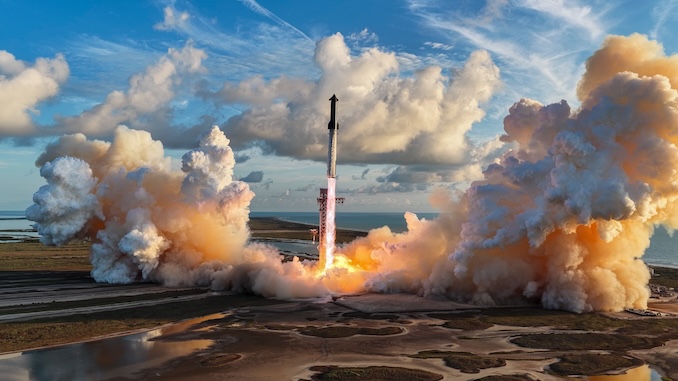
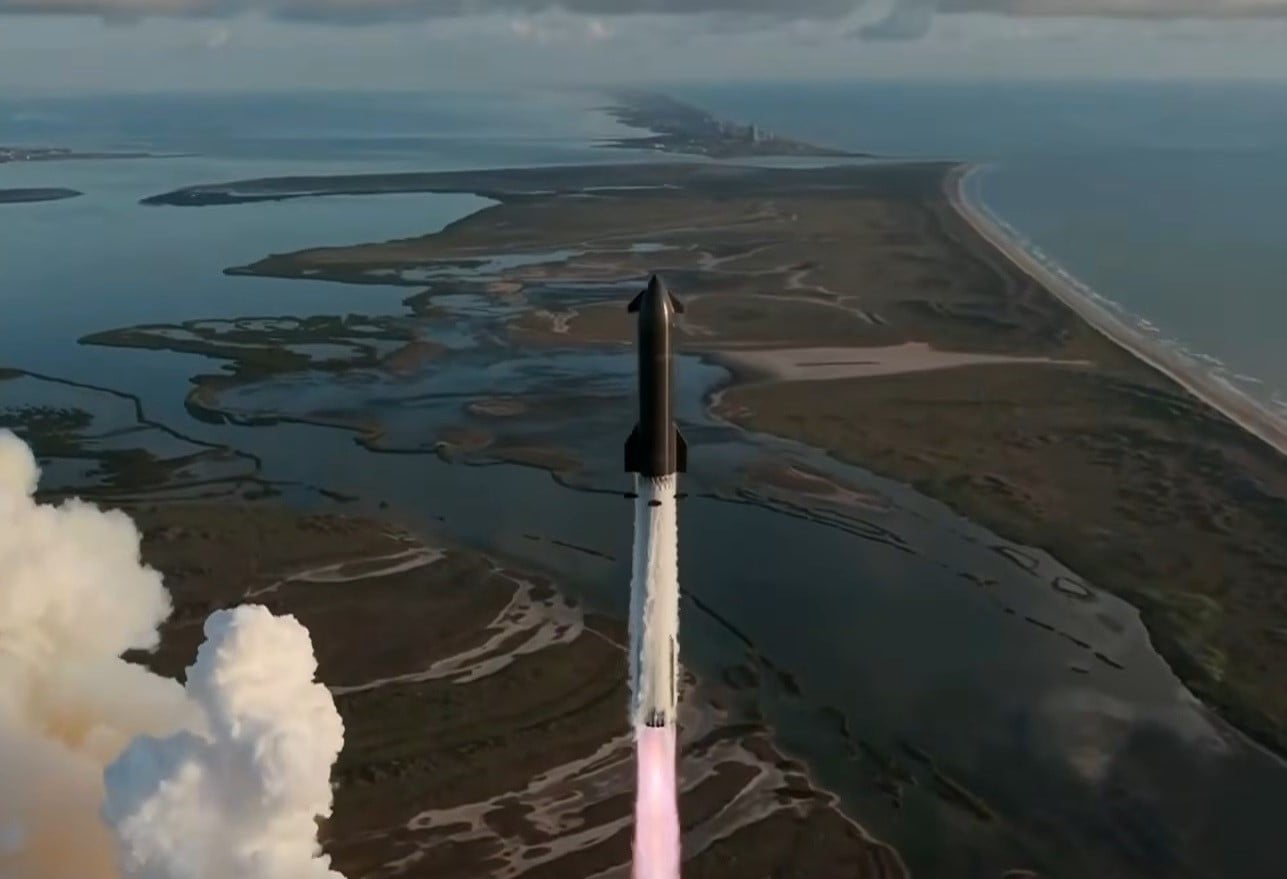
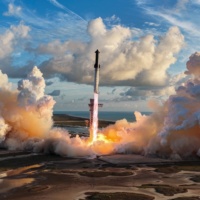
Getting to orbit costs about 9.4 kilometres per second of velocity change, and the rocket equation makes every kilogram of that expensive: a launcher is mostly propellant tank wrapped around a small useful payload. That single constraint explains nearly everything on this page. It is why rockets stage, throwing away structure the moment it stops earning its mass. It is why launch sites cluster near the equator and on coastlines, where the Earth's rotation contributes and the debris falls in water. It is why reusability is the industry's central argument — the first stage is most of the cost and it separates while still low and slow enough to come home.

How brutal the arithmetic is takes a number to feel. A Falcon 9 leaves the pad at about 549 tonnes and puts roughly 17 into low orbit when the booster comes back: everything else is propellant, tankage and the stage that is thrown away. Recovering the first stage is not free either — the landing propellant and the legs are payload that was not carried — and the trade is only worth making because a booster is the expensive part and refurbishment turned out to be cheaper than manufacture, which was the thing nobody could be sure of in advance. Methane engines are the current bet for the same reason: it burns cleaner than kerosene, so the engine comes back needing less work, and it can in principle be made on Mars.

What has changed in the last decade is cadence rather than physics. A single pad in Florida now flies more often than most countries manage in a decade, and a launch has gone from an event to a logistics slot. That shifts the interesting question. It is no longer whether a given launch will work — the answer is very nearly always yes, and a failure is now genuinely news — but what all this capacity is for. Most of it is currently lifting one operator's own constellation, which is a strange kind of market. The next generation of vehicles is being sized for payloads that do not exist yet, on the argument that cheap mass to orbit creates its own demand. That argument has been made before, about the Shuttle, and it was wrong then.

The words this subject keeps using

The whole glossary →

What is on the pad

Counted from the schedule on this gather, not from a press release.

Queued
16

orbital attempts on the books, across the next 8 weeks

Operators
9

SpaceX has 7 of them, which is 44% of the queue

Committed to an hour
8

the rest carry a date only, and a date-only launch is a launch nobody is holding to yet

Next up
Falcon 9 Block 5

SpaceX · 1 Oct from Cape Canaveral SFS, FL, USA

The whole schedule, with the windows and the calendar feeds →

More on launch

Earlier

11 more

11:40 UTC

The Space Solar Report

Solar has become one of the space industry’s most consequential procurement decisions.

Payload

Recent frames

The gallery →
What files a story here

This is the actual list launch & flight is matched on — nothing hidden and nothing inferred. A term on the top line settles it on its own; the second line counts, but needs company. A story that matches nothing here stays untagged rather than being pushed somewhere to fill a gap. How sorting works →

launch vehiclefirst stagesecond stageboosterstatic fireliftofflift offlaunch padorbital launchridesharescrublaunch attemptreusable rocketmethaloxhot fire

rocketfalcon 9starshipnew glennelectronneutronvulcanarianesoyuzlong marchh3 rocketspacexrocket labblue originulafireflyrelativity spacestoke spacelauncherlaunch sitespaceport