Comets & Asteroids
Sept. 28, 1969: The Murchison Meteorite explodes over Australia
At 10:58 AM on Sept. 28, 1969, residents of the small Australian farming community of Murchison, Victoria, heard a series of loud booms.
Deep Field
Starting
C₂ Swan · 516.5 nm
Small-body science and planetary defence — near-Earth object tracking, sample-return missions, meteor shower forecasts, and the occasional object from another star.
Comets and asteroids are the leftovers — the material that never assembled into a planet — and they are scientifically valuable for exactly that reason: they preserve the composition of the early solar system, which the planets have long since cooked and reprocessed. They are also the only astronomical objects that pose a direct physical hazard, which is why more than 35,000 near-Earth objects are catalogued and tracked, and why DART deliberately hit one in 2022 to prove that its orbit could be nudged.
DART worked considerably better than the requirement. Hitting Dimorphos at six kilometres a second was expected to shorten its orbit around its parent asteroid by around seven minutes; it shortened it by thirty-two. The difference is momentum carried away by the debris thrown off the far side, which multiplies the effect of the impactor by a factor that depends on what the surface is made of — and Dimorphos turned out to be a loose pile of rubble rather than a rock, which is why so much came off. That is the useful finding and also the awkward one: deflection works, and how well it works depends on a property you cannot measure from Earth. Hera arrives in 2026 to survey what is left of the crater and turn the number into a model.
The other current era is sample return. Hayabusa2 brought back material from Ryugu and OSIRIS-REx from Bennu, and both carried organic molecules and hydrated minerals — amino acids among them, in a sample sealed in space rather than picked up off Antarctic ice, which removes the objection that has hung over every meteorite result for fifty years. Meanwhile the surveys have begun finding objects from other stars passing through: two confirmed so far, one of them behaving like a comet and one that has still not been satisfactorily explained. Vera Rubin Observatory is expected to make them routine rather than remarkable, which will turn a curiosity into a population with statistics attached, and that is usually where the interesting part starts.
Shower windows are computed; the close approaches are JPL's, refreshed on every gather.
peaks in 22 days, radiant in Orion
2025 UK9, 314,648 km — one lunar distance is 384,400 km, and none of these is going to hit anything
objects passing inside a few lunar distances in the coming weeks
and the reason DART was flown: an orbit that is known can be nudged
Comets & Asteroids
At 10:58 AM on Sept. 28, 1969, residents of the small Australian farming community of Murchison, Victoria, heard a series of loud booms.
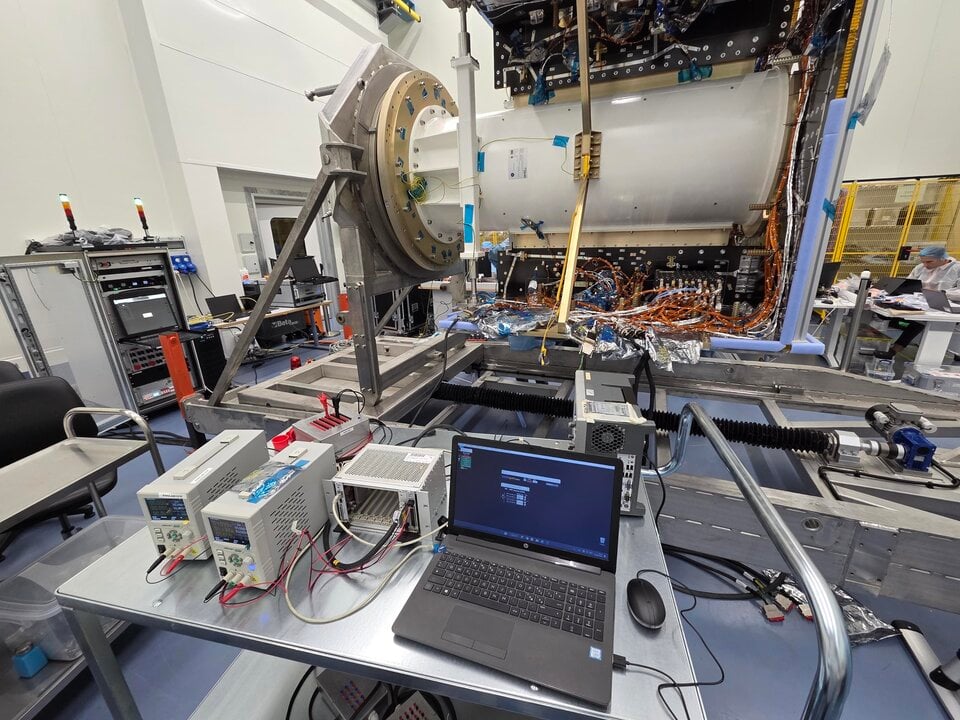
There’s a once-in-a-millennia astronomical opportunity coming up in about three years, and space agencies are rushing to make sure they’re ready for…
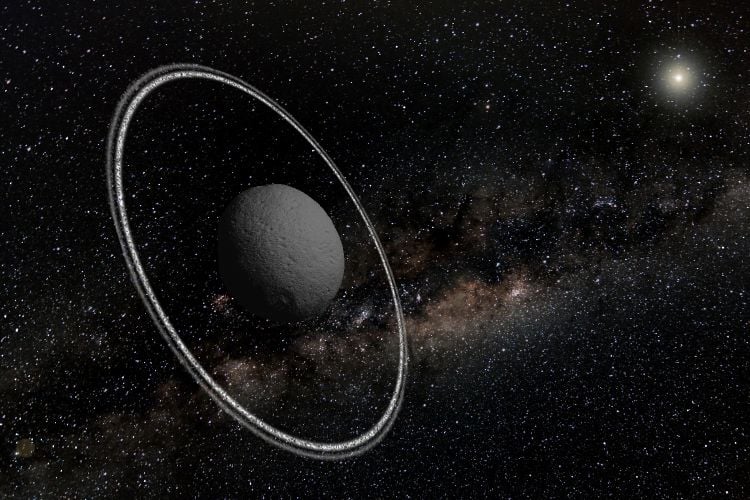
When we think of asteroids, we often think of the main asteroid belt between Mars and Jupiter that contains the majority of…
‘Diamond Jubilee’ Short Bibliography This is a extremely short, very subjective list of papers on gamma-ray bursts, including just one work by…
Ancient grains inside one of the oldest known meteorites reveal that a surprisingly strong magnetic field existed during the solar system’s first…
"If you come up short with who comes down the ladder first, the impact is felt around the world."

The asteroid Bennu orbits the sun once every 1.2 years and approaches Earth every six years, passing within around 300,000 kilometers.

The European Space Agency’s and Japan Aerospace Exploration Agency’s Ramses planetary defence spacecraft has been turned on for the first time by…
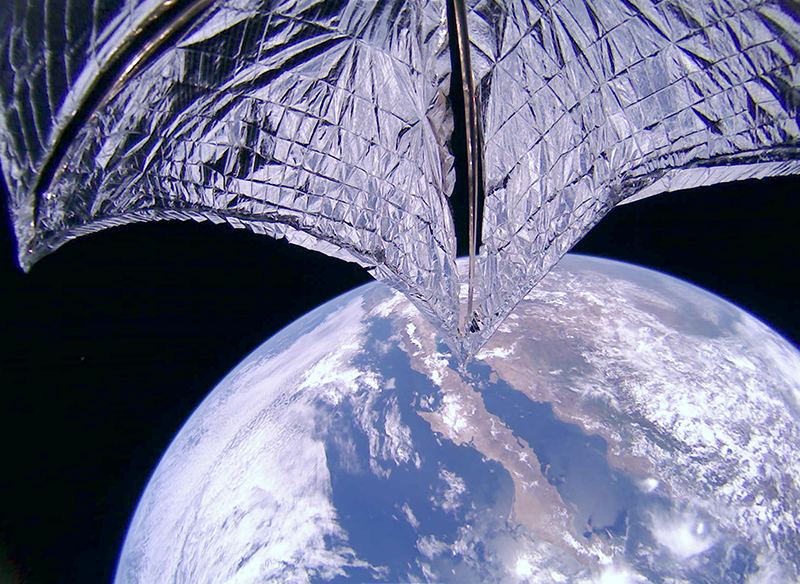
Asteroids don’t come with a warning label that they might one day hit Earth.
Currently speeding through deep space at 12 km/s relative to Earth, ESA’s Hera spacecraft is due to reach…
Ancient iron meteorites reveal that some of the Solar System’s first solid bodies were built mostly from tiny…
Three groups of scientists will receive crowdfunded support to further the scientific exploration of space.
As China integrates crewed and robotic missions to further its lunar exploration program, it is… The post China…
On Sept. 18, 1965, amateur astronomer Kaoru Ikeya and professional astronomer Tsutomu Seki each independently discovered what became…
An amateur astronomer scouting online satellite maps for campsites in Quebec found an impact crater instead.
Meet a key member of our Hera asteroid mission team: the Hera Space Companion, not just an AI…
The Japan Aerospace Exploration Agency's (JAXA) Hayabusa2 spacecraft reached another milestone this summer, a first for space agencies.
Launched as the International Sun-Earth Explorer-3 in 1978, a joint NASA-ESA mission, the ISEE-3 probe studied the solar…
Nitrogen is a key ingredient in the biomolecules that form the building blocks of life.
NASA ·
APOD · NASA — public domain ·
ESO ·
This is the actual list comets & asteroids is matched on — nothing hidden and nothing inferred. A term on the top line settles it on its own; the second line counts, but needs company. A story that matches nothing here stays untagged rather than being pushed somewhere to fill a gap. How sorting works →
near-earth objectplanetary defenseplanetary defencemeteor showerasteroid beltkuiper beltoort cloudinterstellar objectsample returnosiris-rexhayabusadart missionapophistrojan asteroidcentaur objectbennuryuguperseidgeminidleonid
cometasteroidmeteoritemeteoroidfireballimpactorlucy missioncoma taildimorphosdidymos3i/2i/borisovoumuamua