Stars & Supernovae
The Sky Today on Monday, September 28: Open cluster M39 shines
Looking for a sky event this week? Check out our full Sky This Week column. September 27: Catch Saturn’s satellites Although the Moon still dominates much of the…
Deep Field
Starting
O III · 500.7 nm
Stellar astrophysics end to end — protostars in molecular clouds, main-sequence oddities, red giants, white dwarfs, and the supernovae and kilonovae that seed everything else.
A star is a balance between gravity pulling inward and radiation pressure pushing out, and its entire life story is set almost entirely by one number: its mass. A star like the Sun spends ten billion years fusing hydrogen, swells into a red giant, and ends as a white dwarf cooling forever. A star ten times heavier burns through in tens of millions of years and ends in a core collapse that leaves a neutron star or a black hole and scatters the heavier elements everywhere.
The thresholds are sharp and worth knowing, because everything else follows from them. Below about 8% of the Sun's mass, the core never gets hot enough to fuse hydrogen at all and the object is a brown dwarf, glowing on gravitational contraction and slowly going out. Above roughly eight solar masses, the star will end in core collapse rather than as a white dwarf. And a white dwarf itself cannot exceed about 1.4 solar masses — the Chandrasekhar limit, worked out by a nineteen-year-old on a boat to England — beyond which electron degeneracy pressure gives way and the star detonates. That last number is why type Ia supernovae all explode at nearly the same brightness, which is why they can be used as distance markers, which is how the acceleration of the universe was found. A limit derived from quantum mechanics in 1930 turned into the measuring stick for cosmology.
Everything on Earth heavier than helium was made this way, which is not a metaphor but a supply chain — and the heaviest end of it was only pinned down recently. Gold and the other rapid-capture elements need a neutron flux that supernovae struggle to supply, and the 2017 detection of two neutron stars merging, seen in gravitational waves and then in light by seventy observatories, showed the process happening directly. What is new otherwise is the ability to watch stars die in real time. Surveys that image the whole sky every few nights now catch supernovae within hours of the explosion, early enough to see the shock break through the surface and to say what the star had been before it was a light curve.
Worked out from the catalogue against tonight's Moon — not a fixed list.
Pleiades, M39, M34 and M52 are near the meridian around midnight and bright enough to hold up under tonight's sky, which a 94% Moon has cost about 3 grades of darkness. Each has its own page with the full table: nine grades of sky against five instruments.
Stars & Supernovae
Looking for a sky event this week? Check out our full Sky This Week column. September 27: Catch Saturn’s satellites Although the Moon still dominates much of the…
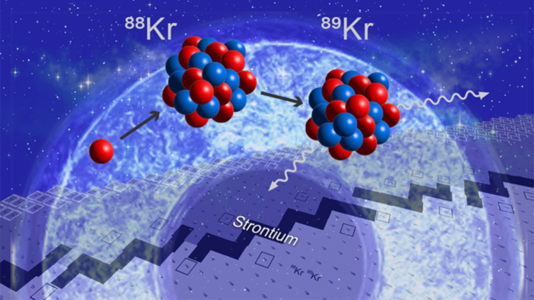
Everything from the gold in your smart phone to the calcium in your bones was originally created in a star.
Born Sept. 27, 1918, and educated at Bradfield College and Oxford University in the U.K.
As before, from this orientation, the black hole’s enormous gravity bends light to make two discernible images of the constellation Orion.
The first frame is dark as you peer into the black hole itself. You begin to look up and stars come back…
The first frame depicts the observer in empty space looking toward the constellation Orion.
Researchers use stellar pulsations to detect substellar companions around A-type stars — including what could be a first-of-its-kind exoplanet.
Glossary BATSE: Acronym for Burst and Transient Source Experiment on board the Compton Gamma-Ray Observatory.

When FUSE was founded in 2020, the goal was to bring the Bay Area VC experience to software firms in Seattle, WA.
APOD Science APOD APOD: 2026 September 25 –… Today’s APOD Archive Submissions Index Search Calendar RSS Education About…
A dead white dwarf with no detectable disk has somehow produced a powerful shock wave that appears to…
Glossary Cepheid: A type of variable star used to determine distance.
‘Great Debate’ Short Bibliography This is a subjective list of 5 excellent refernce works about the Great Debate…
by Robert Nemiroff (Michigan Technological University) Ever wonder what it would look like to travel to a black…
As a star nears the end of its life, it faces two very different fates: It can explode…
APOD Science APOD APOD: 2026 September 24 –… Today’s APOD Archive Submissions Index Search Calendar RSS Education About…
The Compact Accelerator System for Performing Astrophysical Research (CASPAR) recreates conditions inside stars to study how elements are…
NASA's Hubble Space Telescope completed its 200,000th orbit around Earth on Sept.
Aloke Palsikar, taken from Pie Town, New Mexico The Crescent Nebula (NGC 6888) is an emission nebula about…
NASA’s Hubble Space Telescope captured this image of massive galaxy cluster MACS J0417 (left of center) on Sept.
NASA ·
APOD · NASA — public domain ·
ESO ·
This is the actual list stars & supernovae is matched on — nothing hidden and nothing inferred. A term on the top line settles it on its own; the second line counts, but needs company. A story that matches nothing here stays untagged rather than being pushed somewhere to fill a gap. How sorting works →
supernovakilonovanova outburstneutron starwhite dwarfred giantprotostarstellar nurserystar-forming regionstar formationmagnetarpulsarbrown dwarfstellar evolutionmain sequenceglobular clusteropen clusterplanetary nebulawolf-rayetbetelgeusecepheid
nebulastellar windbinary starvariable starred dwarfblue supergiantsupernova remnantmolecular cloudnucleosynthesisstar cluster