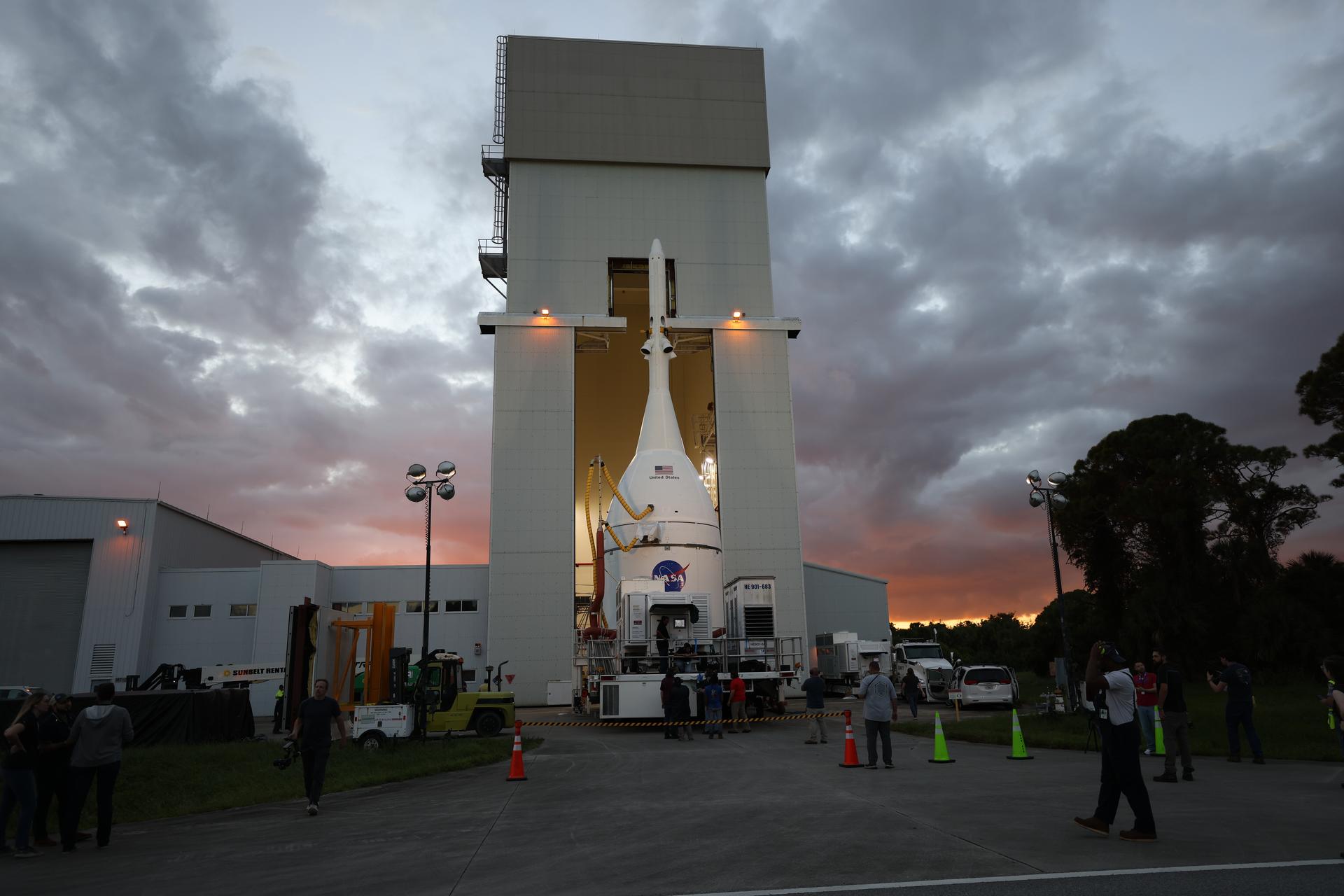
Management Roles and Facilities
The Orion Program, managed by NASA’s Johnson Space Center in Houston, is a broad national and international collaboration.
Deep Field
Starting
Weekly digests · 31 Aug – 6 Sep 2026
300 stories that week, most of them about the solar system, launch & flight, satellites & orbit.
The Orion Program, managed by NASA’s Johnson Space Center in Houston, is a broad national and international collaboration.
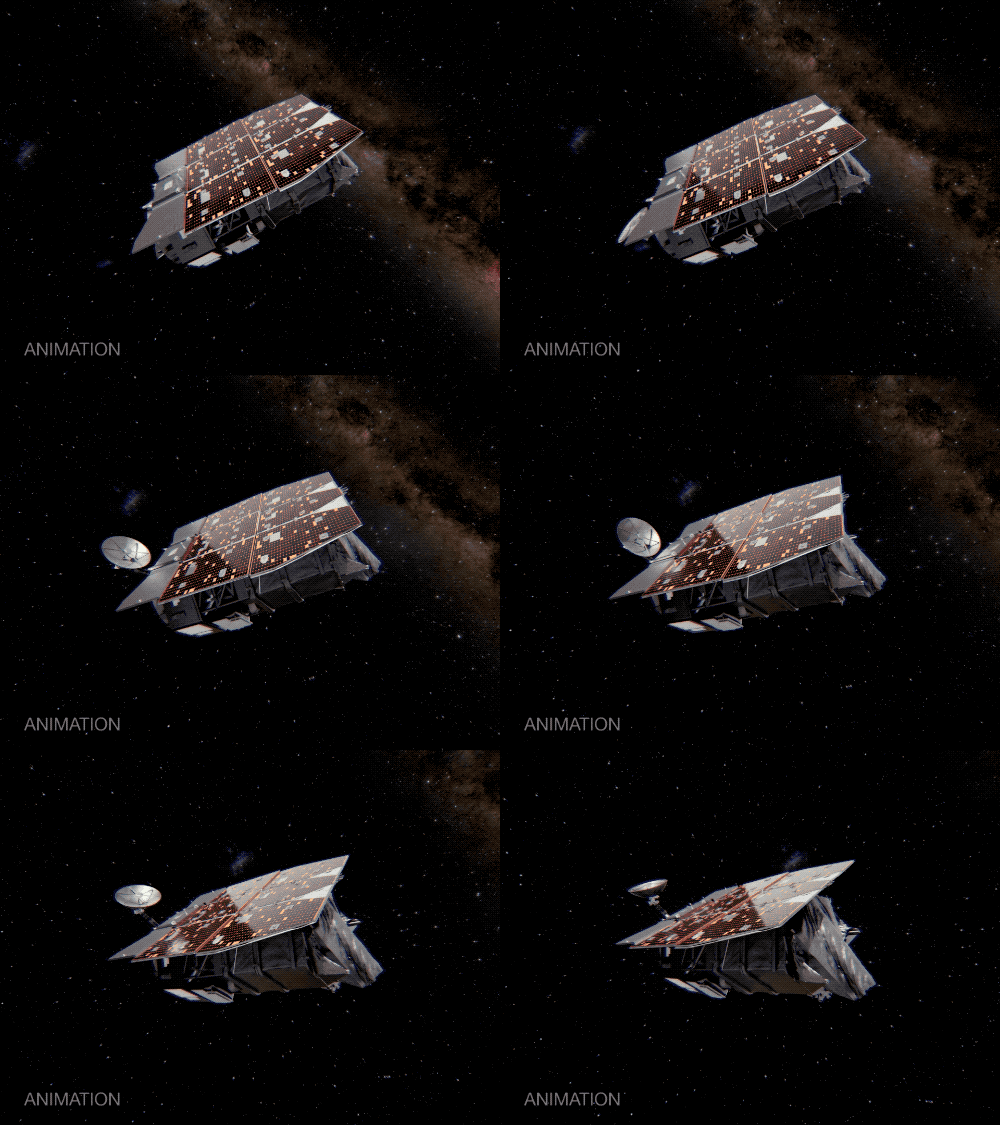
Roman’s antenna and visor-like sunshade have successfully deployed. Roman will downlink the highest data volume of any NASA astrophysics mission so far…
Also covered by Astronomy Magazine

Gen. Douglas Schiess succeeds Gen. Chance Saltzman as the third chief of space operations of the U.S. Space Force
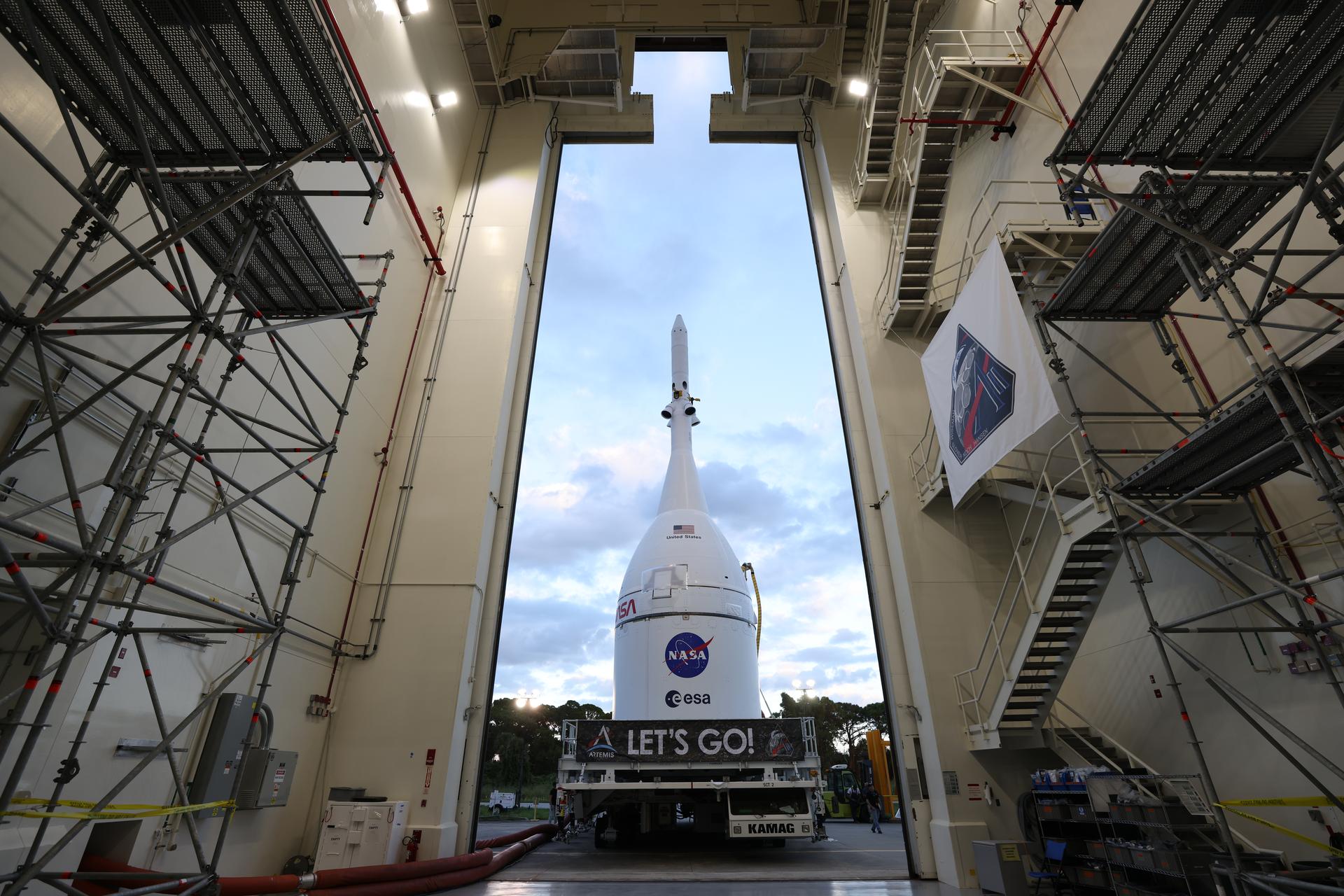
Orion’s launch abort system, also known as the LAS, is designed to carry the crew to safety in the event of an…
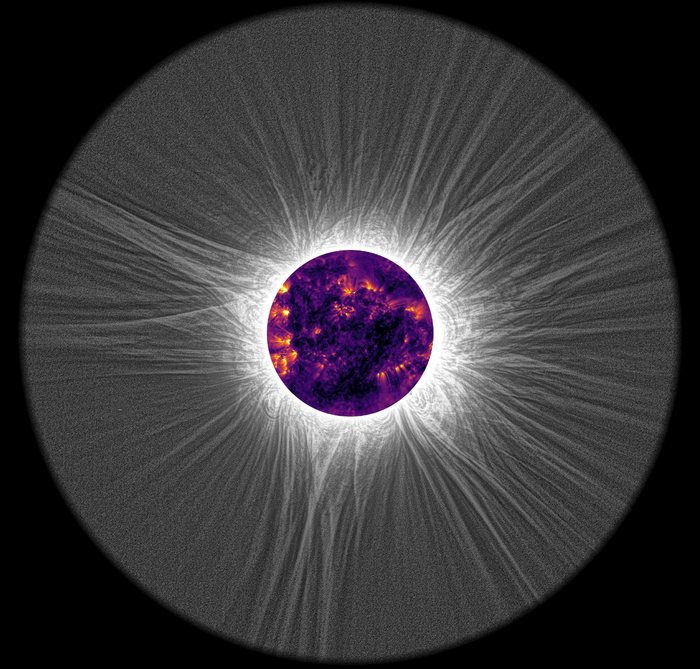
Presentation | Grades 6-12+ | Dr. Laura Peticolas explains how the Eclipse MegaMovie 2024 team drew upon data from volunteers along the…

The Orion primary flight computers have over 750,000 lines of code that operate all the spacecraft systems, including power, communications, guidance, navigation…
NASA Earth Observatory ·
NASA Earth Observatory ·
NASA Earth Observatory ·
PLANETARY EXPLORATION SCIENCE TECHNOLOGY OFFICE NASA Selects 2 Instruments for Artemis IV Lunar Surface Science NASA has selected…
Explore Subcontracting Opportunities Click on a prime contractor below to learn more about their small business programs, contact…
This problem set and educator’s guide from Space Math at NASA features 75 math problems for students grades…
Presentation | Grades 6-12+ | This presentation by Dr. Kevin Reardon of University of Colorado Boulder covers solar…
The Orion Program conducted rigorous testing of the spacecraft, from element-level testing with test articles for the crew…
This educational guide provides 10 math problems from Space Math at NASA exploring the lunar surface using scales…
Presentation | Grades 6-12+ | In this presentation Dr. Samuel Schonfeld of the Air Force Research Laboratory (AFRL)…
On August 4, 2026, a major update to Eyes on the Solar System was released that included full…
NASA astronaut Jessica Meir and ESA (European Space Agency) astronaut Sophie Adenot began a spacewalk at 8:40 a.m.
The NASA Science Mission Directorate (SMD) and Human Spaceflight Mission Directorate (HSMD) have released the final text of…
Presentation | Grades 6-12+ | This presentation by Dr. Jared Espley explains how the Sun sends a stream…
In May, Landsat Science Team member and atmospheric correction expert Eric Vermote won the William T.
1-3 September 2026. The Community Science (Ad ASTRA) Workshop is organized by the NASA Astrophysics Division.
PESTO manages technology development (for TRL 1 – 6) through programs such as PICASSO, MatISSE, DALI; makes recommendations…
At 12:02 p.m. EDT, Roman began an approximately 3-minute mid-course correction burn to adjust its trajectory toward its…
NASA’s Nancy Grace Roman Space Telescope team has successfully activated the mission’s Coronagraph Instrument, which will block starlight…
Rainfall deficits and high temperatures have created unusually dry conditions and have spurred water shortages on much of…
Explore fun facts about the Orion spacecraft.
The Astrophysics Division at NASA Headquarters is looking for one or more interns to incorporate Artificial Intelligence (AI)…
This item announces a correction to D.8 HWO-PSI.
This problem set and educator’s guide from Space Math at NASA features 11 math problems where students, grades…
ROSES-2025 Amendment 70 releases D.4 TCAN as a new opportunity in ROSES-25.
LISA Science Gaps 2026: Open for Community Input Until 16 September 2026
Peeking into the clean room at the Johns Hopkins Applied Physics Laboratory (APL) in Laurel, Maryland, it might…